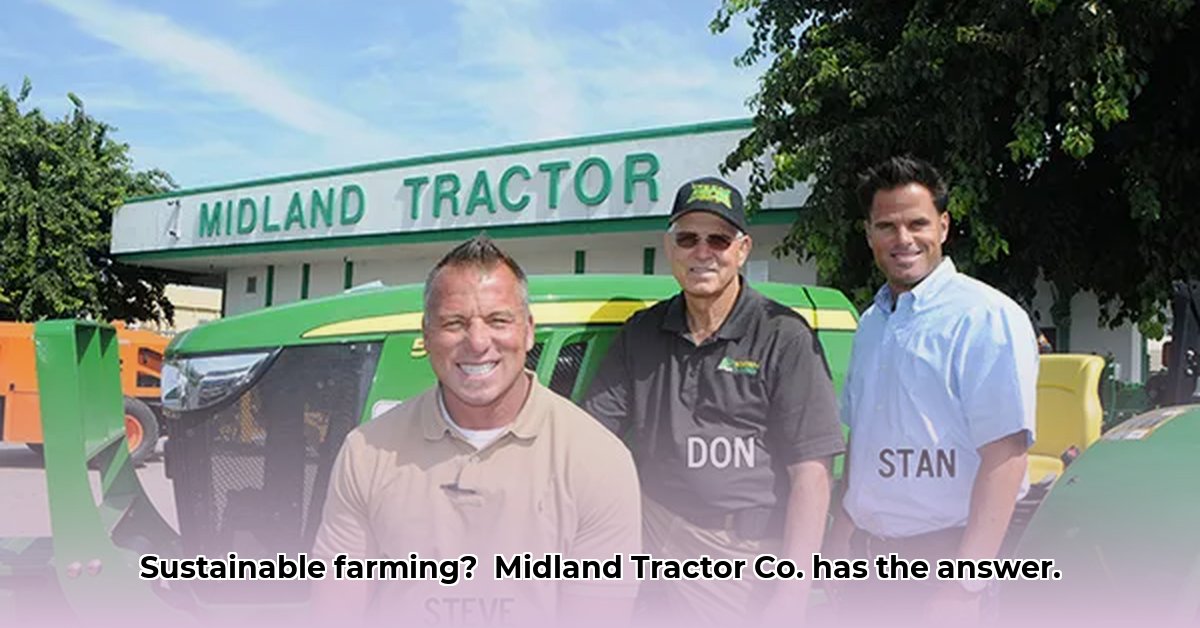
Midland Tractor Co. has served the agricultural community for over 40 years, establishing a strong reputation for reliability and support. While their website highlights equipment sales and parts distribution, their emphasis on grower education suggests a commitment to sustainable farming practices. This article analyzes Midland Tractor Co.'s current contributions to sustainable agriculture, identifies areas for improvement, and provides actionable recommendations for all stakeholders. For a look at alternative equipment, check out this electric tractor.
Parts, Service, and Sustainable Farming Practices
Midland Tractor Co.'s network of nine strategically located parts drop boxes significantly reduces transportation costs and fuel consumption, demonstrating a commitment to environmental responsibility. This efficient distribution system benefits both the company and the environment. However, a more comprehensive assessment requires additional information. Currently, lacking is detailed data on the fuel efficiency and environmental impact of the equipment Midland Tractor Co. sells. Transparency regarding their overall carbon footprint and specific environmental protection programs is crucial for a complete evaluation.
Midland Tractor Co.: Strengths and Opportunities for Growth
Midland Tractor Co.'s efficient parts distribution network is a clear strength, directly contributing to environmental sustainability by minimizing transportation emissions. This streamlined approach showcases a practical commitment to reducing environmental impact. However, critical gaps exist in available data. Further information is needed on the fuel efficiency and emission levels of the equipment they sell, as well as more details of their farmer education programs and their effectiveness in promoting sustainable practices. The lack of this detailed information limits a thorough analysis of their overall contribution to sustainable agriculture.
Actionable Steps for a More Sustainable Agricultural Future
The following table outlines actionable short-term and long-term goals for various stakeholders to enhance sustainability within the agricultural sector:
| Stakeholder | Short-Term Goals (Next Year) | Long-Term Vision (3-5 Years) |
|---|---|---|
| Midland Tractor Co | Publicly release detailed equipment specifications, including fuel efficiency and emissions data. Develop and implement comprehensive sustainability training programs for employees. | Develop and promote comprehensive sustainability programs, potentially including carbon offsetting initiatives and support for sustainable fuel alternatives. Implement a robust environmental impact assessment process for all new equipment acquisitions. |
| Growers/Farmers | Utilize Midland's parts drop boxes and actively seek fuel-efficient equipment. | Adopt eco-friendly farming methods such as no-till farming. Invest in more sustainable equipment and explore alternative energy sources for farm operations. |
| Government Agencies | Introduce incentives and policies that support the adoption of sustainable equipment and practices. | Set stricter emission standards for agricultural equipment and fund research into sustainable agricultural technology. Implement effective regulatory frameworks that support farmers' transition to sustainable farming methods. |
| Industry Analysts | Conduct independent assessments of the environmental impact of Midland Tractor Co.'s equipment and operations to ensure transparency and accountability. | Continuously monitor Midland Tractor Co.'s sustainability initiatives and assess their broader impact on the agricultural sector's environmental footprint. Publish regular reports on sustainability trends and best practices within the industry. |
Key Takeaways and Future Directions
Midland Tractor Co.'s efficient parts distribution system represents a positive contribution to sustainable agriculture. However, a lack of transparent data regarding equipment specifications and environmental impact hinders a complete assessment of their overall sustainability efforts. Greater transparency, coupled with broader sustainability initiatives, will significantly increase their positive impact on the agricultural sector's environmental footprint. Further research is vital to fully understand the long-term effects of various farming techniques and equipment on overall sustainability. Numerous factors influence environmental outcomes, and continuous research is essential for refinement and improvement of sustainable practices. A collaborative approach involving Midland Tractor Co., farmers, government agencies, and industry analysts is crucial for realizing a truly sustainable future in agriculture.